
New opportunities for research into bone marrow diseases
Bone marrow diseases disrupt the production of healthy blood cells production from blood stem cells. This can lead to severe anemia, requiring regular blood transfusions. Sanquin is working on a new method to better understand and treat these types of diseases. Researchers Micha Nethe and Eszter Varga will start a pilot study in which they grow patients’ stem cells in a special culture system.

Our blood cells are produced by stem cells in the bone marrow, deep inside our bones. In bone marrow diseases such as myelodysplastic syndrome (MDS), a rare condition that mainly occurs in older people, blood cell production becomes impaired. This is caused by changes in the DNA of stem cells that develop over a lifetime. As a result, the bone marrow contains not only healthy stem cells but also damaged ones that barely produce blood cells. The severity of symptoms varies per patient. Treatment consists of blood transfusions, which have drawbacks, such as iron accumulation in organs, requiring medication.
Studying stem cells
To understand what goes wrong in MDS, researchers want to grow patients’ stem cells in the lab. But this is not possible in existing culture systems. Micha Nethe explains: “You want to culture these stem cells to study the process of blood formation. But in current systems, this doesn’t work—just like in the body, they cannot produce blood cells.”
Organoids
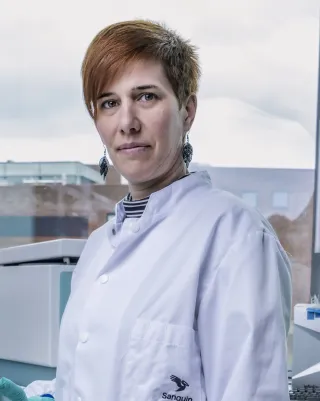
Micha’s research connects to that of Eszter Varga, who is working on developing cultured red blood cells to supplement blood donations to address the worldwide need. For this, she grows organoids that provides an environment similar to the bone marrow. They contain not only blood stem cells but also supportive cells, enabling the stem cells to optimally produce blood cells. Eszter: “These organoids create an environment similar to bone marrow. This gives stem cells the right support to make blood cells, including the red blood cells that are so important for treating MDS. The organoids may also help stimulate diseased stem cells from patients to start producing blood.
Getting them to work

For this Sanquin-funded pilot project, Micha and Eszter will combine patients’ stem cells in culture with organoids. The supportive cells from the organoids will allow the patient’s stem cells to grow in a dish, providing an excellent model system for MDS. To confirm that the blood cells are truly produced by the patient’s stem cells—and not by the organoids—the researchers use advanced genetic techniques. Moreover, genetically engineered organoids enable drug testing for MDS and other bone marrow stem cell disorders. Micha: “This might provide tools to study how to improve the balance between healthy and diseased stem cells in the bone marrow, so patients can make enough blood themselves again.”
The pilot study will last one year and aims to lay the foundation for further research into various bone marrow diseases.
Actueel

Searching for the correct recipe for making blood

Large boost for Sanquin researchers to culture blood cells

Sanquin Research welcomes new PI in stem cell research
