
Thesis Marit Jalink
On 17 April 2026 Sanquin and LUMC researcher Marit Jalink defended her thesis 'Autoimmune Hemolytic Anemia: evaluation of diagnostic features in correlation with the clinical course' at Leiden University.
Promotor: Prof M de Haas MD PhD
Copromotores: C Folman PhD and JMI Vos MD PhD
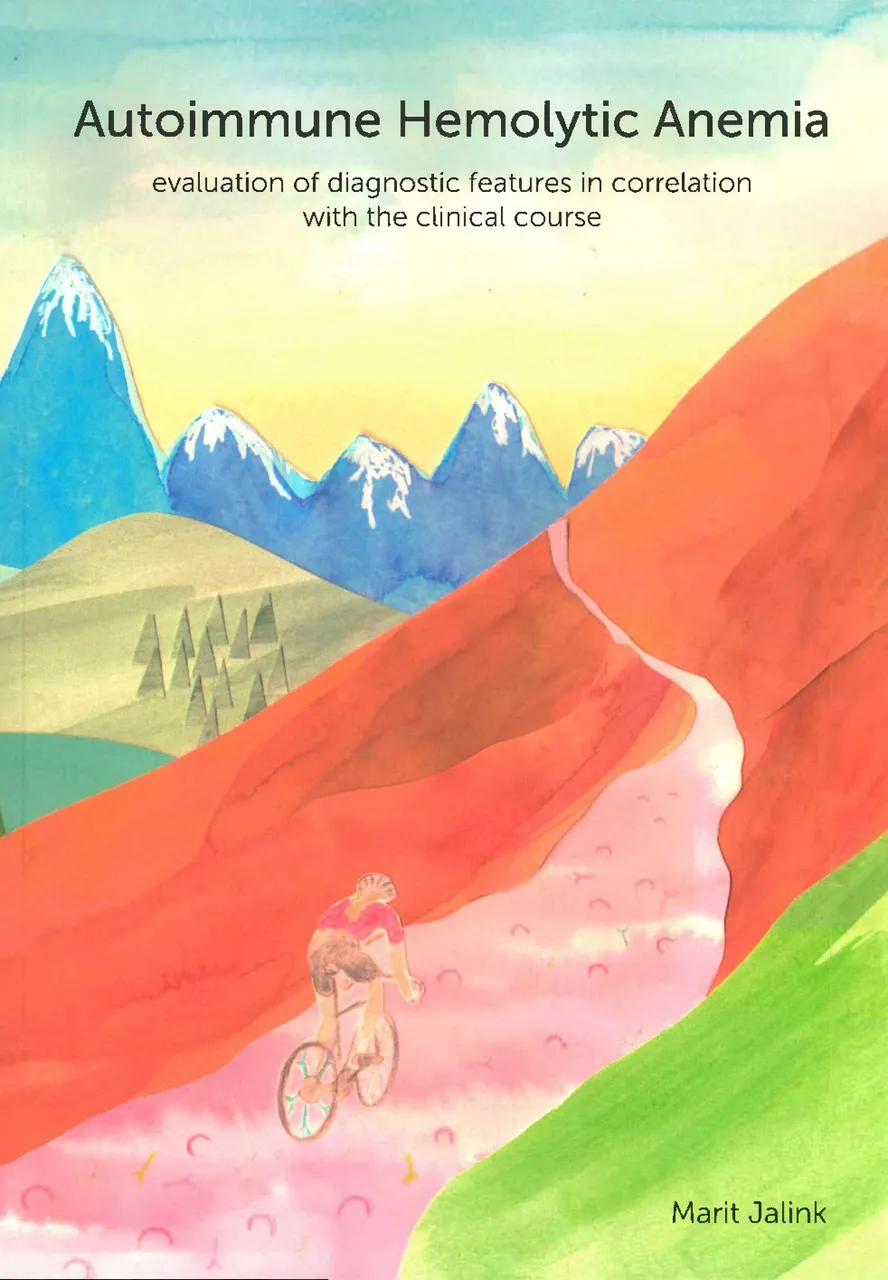
Autoimmune hemolytic anemia (AIHA) is caused by autoantibodies directed against a patient’s own red blood cells, leading to their destruction, a process known as hemolysis. This can result in life-threatening anemia. AIHA is diagnosed based on clinical signs of hemolysis and laboratory findings, particularly the detection of autoantibodies and complement components on the patient’s red blood cells. AIHA can be classified into warm AIHA (wAIHA), cold AIHA (cAIHA), mixed forms, and the rare paroxysmal cold AIHA. wAIHA is typically mediated by IgG autoantibodies, whereas cAIHA is usually driven by IgM autoantibodies that activate the classical complement pathway.
In this thesis, we focus on the complex pathophysiology underlying AIHA, together with the optimization and standardization of laboratory testing for autoantibodies. We further systematically evaluate the efficacy and safety of novel treatment options for patients with refractory AIHA, including complement inhibitors, B-cell–targeting Bruton’s tyrosine kinase inhibitors, and the plasma cell–targeting drug daratumumab.
We initiated a national prospective study, the Data Registry of AutoImmune Hemolytic Anemia (DRAIHA study). This study systematically collects serological and clinical data, along with patient outcomes, to improve understanding of AIHA pathophysiology and to contribute to the development of personalized, evidence-based diagnostic and treatment strategies.
Chapters
Part 1: OverView
Chapter l
General introduction and thesis outline
Chapter 2
The DRAIHA study: Data Registry of Autolmmune Hemolytic Anemia, to improve diagnostic testing for the development of personalized treatment protocols in Al HA patients.
Part 2: Pathogenesis of AIHA
Chapter 3
Halting Targeted and CollateraI Damage to Red Blood Cells by the Complement System.
Part3: Treatment of relapsed or refractory AIHA patients
Chapter 4
Cl-inhibitor treatment in patients with severe complement-mediated autoimmune hemolytic anemia. abstract
Chapter 5
Effect of ibrutinib treatment on hemolytic anemia and acrocyanosis in cold agglutinin disease/cold agglutinin syndrome. abstract
Chapter 6
Daratumumab monotherapy in refractory warm autoimmune hemolytic anemia and cold agglutinin disease. abstract
Part 4: Optimizing laboratory testing in cold AIHA
Chapter 7
Systematic Review for the Serological Testing for Cold Agglutinins: The BEST Collaborative Study. abstract
Chapter 8
Unifying serological testing for cold agglutinins. abstract
Part 5: Summary and future perspectives
Chapter 9
Summary and future perspectives
Download
Download thesis from university repository (when available)