
Thesis Bert Veuskens
On 7 January 2027, Sanquin researcher Bert Veuskens defended his PhD thesis 'Complementing the factor H protein family: from assays to outcomes ' at the University of Amsterdam.
Promotor: Prof TW Kuijpers MD PhD
Copromotor: RB Pouw PhD
Venue: Agnietenkapel, University of Amsterdam
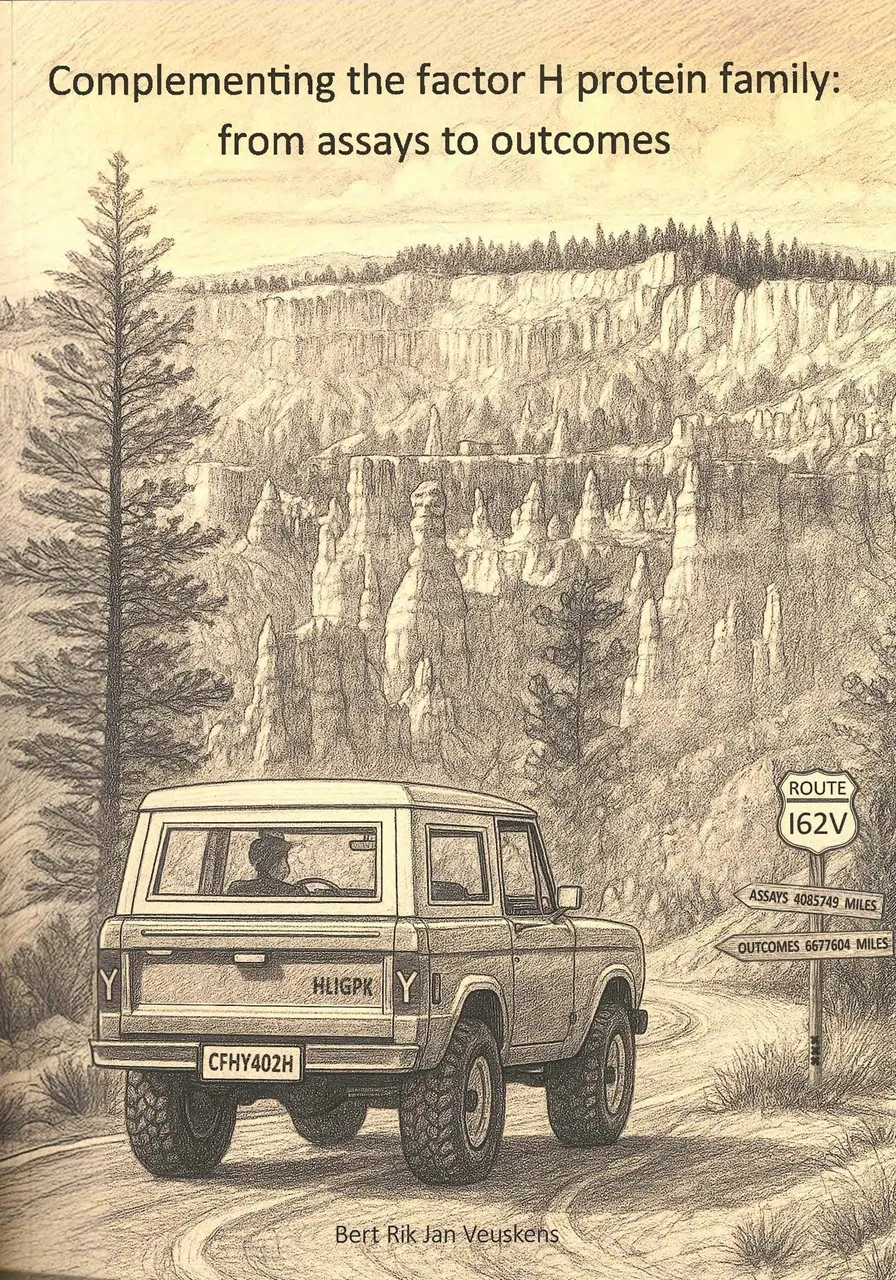
As part of the European consortium SciFiMed (Screening for Inflammation to Initialize Personalized Medicine), this thesis addressed key challenges in studying the factor H (FH) protein family , with a particular focus on the FH-related (FHR) proteins . These challenges include longstanding controversies surrounding FHR protein function, the lack of consensus on their physiological concentrations, and the absence of standardized assays . In this thesis, we first developed highly specific reagents targeting individual FHR proteins and, together with SciFiMed partners, optimized and validated existing and novel immunoassays. This resulted in standardized, robust immunoassays enabling reliable and specific quantification of the entire FH protein family . These tools allowed us to resolve inconsistencies in reported protein concentrations and to further unravel the biological roles of the FHR proteins in physiological and complement-associated pathological contexts (cancer and age-related macular degeneration ( AMD)). Next, using these assays , we further characterized the dynamics, kinetics and distribution of FHR-1 and FHR-2 dimers in a large cohort of healthy individuals and demonstrated how genetic variants influence their abundance. Moreover, we showed that the four most common CFH haplotypes in the European population give rise to distinct and classifiable protein expression profiles, establishing characteristic protein ratios between FH, FHL- 1, and the FHRs. Finally, in a well-characterized cohort of patients with AMD, we showed a tissue-specific haplotype and disease- associated shift in protein concentrations, potentially explaining their strong association with this debilitating disease. Altogether, these findings highlight the significant role of the FHR proteins in fine-tuning complement regulation across different anatomical sites.
Chapters
Chapter 1
General introduction and scope of the thesis
Chapter 2
Evaluating the clinical utility of measuring levels of factor H and the related proteins abstract
Chapter 3
Development and characterization of novel ELISAs for the specific quantification of factor H related proteins 2, 3, 4 and 5 abstract
Chapter 4
Factor H related-2 levels dictate FHR dimer composition abstract
Chapter 5
Common haplotypes within the chromosome 1q31.3 region determine systematic concentrations of the entire complement factor H protein family abstract
Chapter 6
Prognostic significance of serum complement activation, neutrophil extracellular traps and extracellular DNA in newly diagnosed epithelial ovarian cancer abstract
Chapter 7
Haplotype-defined Chr1q31.3 complotypes drive tissue-specific dysregulation of the complement factor H protein family underlying AMD susceptibility
Chapter 8
Summarizing discussion
Download
Download thesis from university repository