
Thesis Mariarosaria Miranda
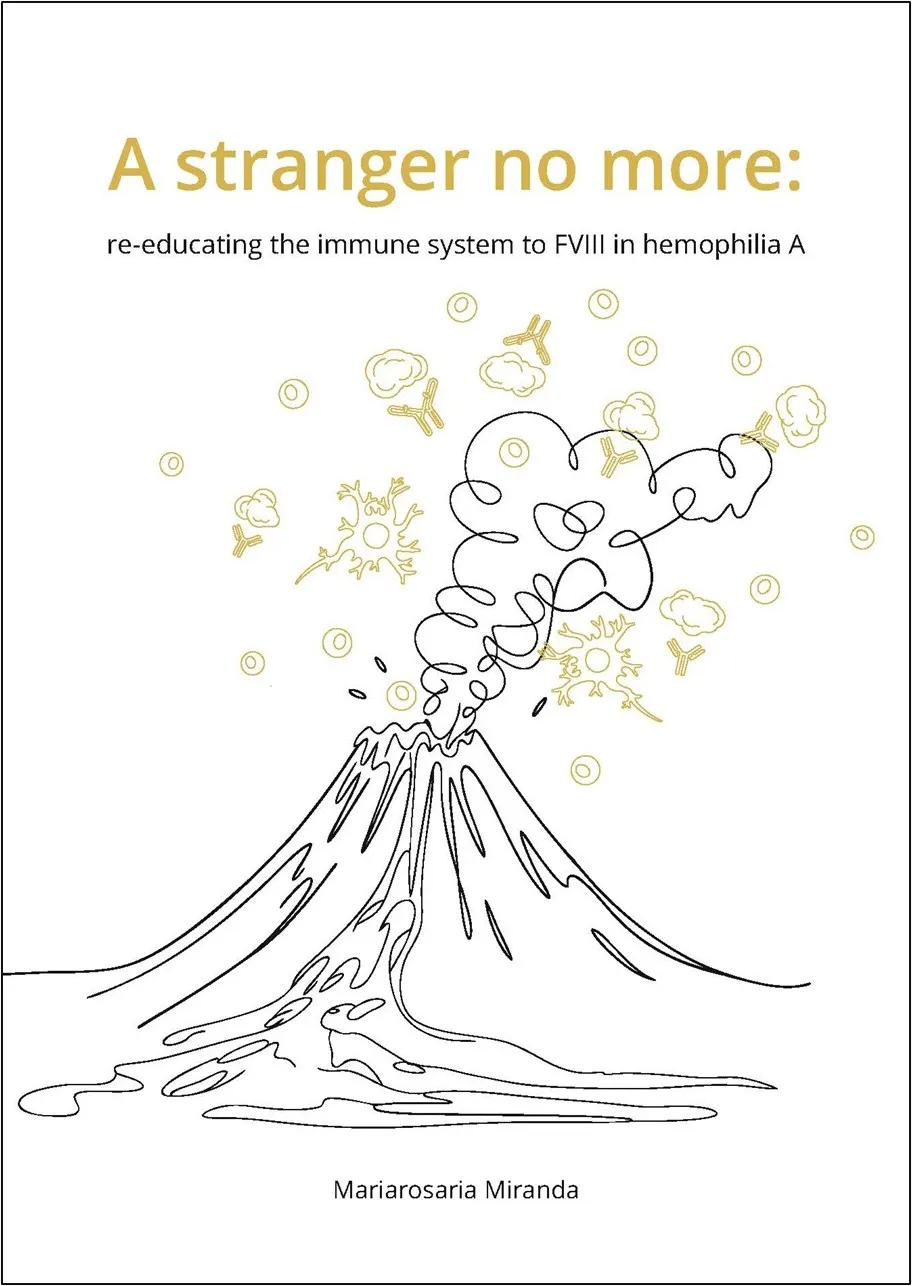
On 6 November 2025 Mariarosaria Miranda defended her PhD thesis 'A stranger no more: re-educating the immune system to FVIII in hemophilia A' at the University of Amsterdam.
Promotores
Prof JJ Voorberg PhD and Prof CJ Fijnvandraat MD PhD
Venue
Agnietenkapel, University of Amsterdam
Abstract
One of the main challenge in the treatment of hemophilia A is the formation of inhibitory antibodies against factor VIII (FVIII), limiting the efficacy of replacement therapies. Addressing this requires a comprehensive understanding of how the immune system recognizes and responds to FVIII, with the goal of translating this knowledge into novel strategies to prevent or mitigate immune complications. Investigation of FVIII peptide presentation on HLA-DP molecules, particularly HLA-DP4, identified promiscuous peptides that provide a foundation for epitope-based interventions aimed at promoting immune tolerance. Concurrently, red blood cells (RBCs) have been explored as a delivery system for FVIII peptides fused to the TAT peptide, demonstrating efficient antigen delivery to immune cells and supporting RBCs as an effective platform for hemophilia therapy. Enhancement of antigen targeting through FVIII fusion proteins linked to Annexin A5 (AnxA5) engages the apoptotic clearance pathways; these fusion constructs efficiently enter the antigen presentation pathways, suggesting a route to induce tolerogenic immune responses by mimicking clearance mechanisms. Furthermore, examination of FVIII-containing immune complexes revealed that targeting the inhibitory Fcγ receptor IIb (FcγRIIb) may reduce dendritic cell activation, highlighting an additional mechanism to suppress anti-FVIII responses. Characterization of the spectrum of anti-FVIII antibodies in a large hemophilia A cohort provided deeper insight into the role of non-neutralizing antibodies (NNA), suggesting that certain antibody subclasses may serve as markers of inhibitor risk or immune regulation. Together, these studies present a coherent picture of FVIII immunogenicity and highlight multiple avenues for developing targeted strategies to enhance immune tolerance.
Chapters
Chapter 1
General Introduction
Chapter 2
FVIII peptides presented on HLA-DP and identification of an A3 domain peptide binding with high affinity to the commonly expressed HLA-DP4 abstract
Chapter 3
Exploring red blood cells as an antigen delivery system to modulate the immune response towards FVIII in hemophilia A abstract
Chapter 4
MHC class II presentation of FVIII-AnnexinA5 fusion proteins internalized by antigen presenting cells abstract
Chapter 5
Reduced TNFα and IL-10 release by Pam3CSK4-stimulated dendritic cells by factor VIII immune complexes preferentially targeting FcʏRIIb
Chapter 6
The spectrum of neutralizing and non-neutralizing anti-FVIII antibodies in a nationwide cohort of 788 persons with hemophilia A abstract
Chapter 7
General discussion
Download
Download thesis from university repository (when available)