
Thesis Laura Kummer
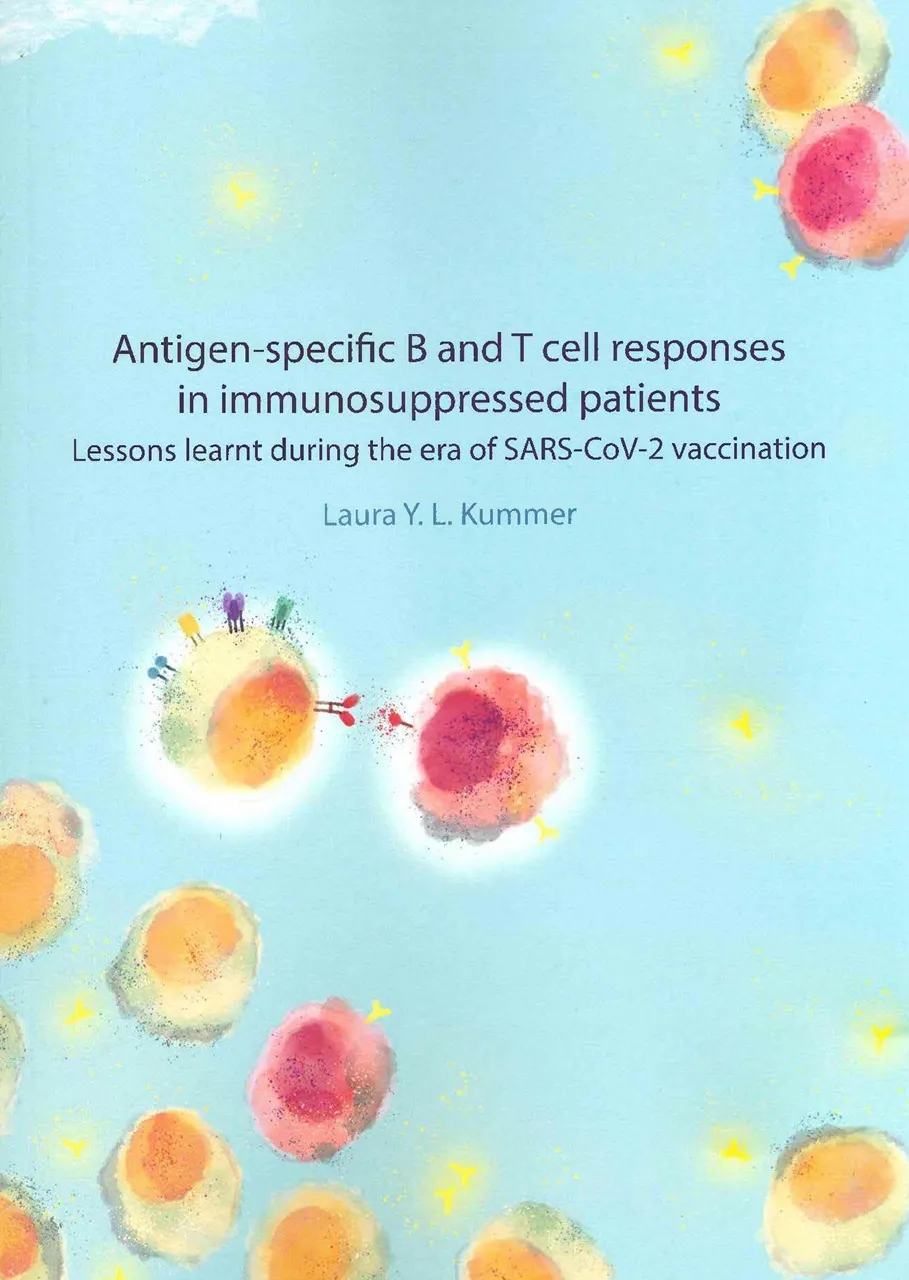
On 27 November 2025 Sanquin researcher Laura Kummer defended her PhD thesis 'Antigen-specific B andT cell responses in immunosuppressed patients: Lessons learnt during the era of SARS-CoV-2 vaccination' at the University of Amsterdam
Promotores: Prof TW Kuijpers MD PhD and Prof SM van Ham PhD
Copromotores: JA ten Brinke PhD and F Eftimov MD PhD
Venue: Agnietenkapel, University of Amsterdam
Abstract
During the SARS-CoV-2 pandemic, understanding protective immunity after infection or vaccination became a national and scientific priority. While most research has focused on antibody (humoral) responses, T cells also play a crucial role, especially when antibody production is impaired. This thesis investigates how immunosuppressive therapies in patients with autoimmune diseases affect the induction of antigen-specific T and B cell responses after SARS-CoV-2 mRNA vaccination. First, we optimized the enzyme-linked immunosorbent spot (ELISpot) and activation-induced marker (AIM) assays to improve the detection of SARS-CoV-2-specific T cells. Next, we used high-dimensional flow cytometry followed by unsupervised clustering to characterize the complexity of SARS-CoV-2-specific B cell differentiation over time. In multiple sclerosis, patients are often treated with B cell depleting therapies, such as ocrelizumab or fingolimod. Ocrelizumab-treated patients retained SARS-CoV-2-specific T cell responses, whereas fingolimod-treated patients showed impaired cellular immunity. In RA patients, methotrexate reduced CD4 T cell induction which could explain the slightly slower humoral responses. Conversely, TNF inhibitor-treated IBD patients showed impaired spike-specific B cell responses, particularly affecting germinal center-derived (CD11c−) populations, while extrafollicular-like CD11c+ B cells remained unaffected—suggesting TNF signaling is crucial for germinal center formation. Lastly, SARS-CoV-2 vaccination triggered non-cognate (‘bystander’) B cell activation, with transient increases in unrelated antibody titers. Possibly, the antigen-independent reactivation of memory B cells could help maintain circulating antibody levels, thereby protecting against future infections. Together, this work advances our understanding of adaptive immunity under immunosuppressive conditions and informs vaccine strategies for vulnerable patient populations.
Chapters
Chapter 1
General introduction
Chapter 2
Longitudinal T-cell responses after a third SARS-CoV-2 vaccination in patients with mulitple sclerosis on ocrelizumab or fingolimod abstract
Chapter 3
Combining activation-induced markers with PD-L1 selectively enhances detection of antigen-specific T cells in virus-infected individuals
Chapter 4
A novel activated B cell compartment arising early and transiently after antigen exposure
Chapter 5
Methotrexate treatment Kampers induction of vaccine-specific CD4T cell responses in IMID patients abstract
Chapter 6
TNF inhibitors affect the induction and maintenance of spike-specific B cell responses after mRNA vaccination abstract
Chapter 7
SARS-CoV-2 mRNA vaccination leads to transient humoral and B cell bystander responses in adults
Chapter 8
General discussion
Download
Download thesis from university repository (when available)